







Professor Martin Green Visits DAS Solar to Advance DBC Technology Collaboration
2026-04-30
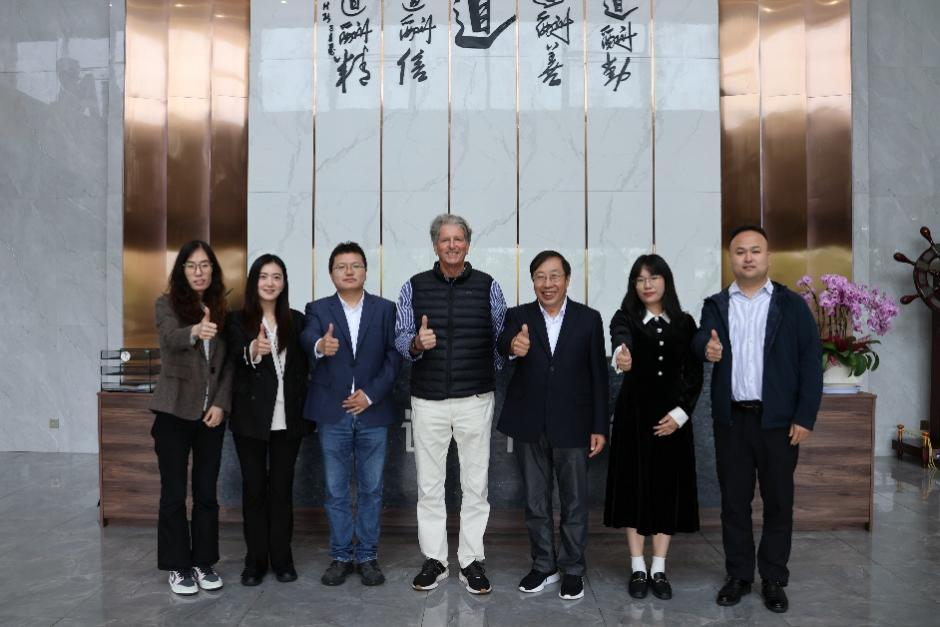
On April 29, Professor Martin Green of the University of New South Wales (UNSW), widely recognized as a pioneer in the global solar industry, visited DAS Solar for technical exchanges and collaboration discussions. The two sides held extensive discussions on DBC (DAON-BC) high-efficiency cell technology, collaboration on next-generation PV innovations, and industry-academia research initiatives. The exchange further strengthened the foundation for long-term strategic cooperation between DAS Solar and UNSW.
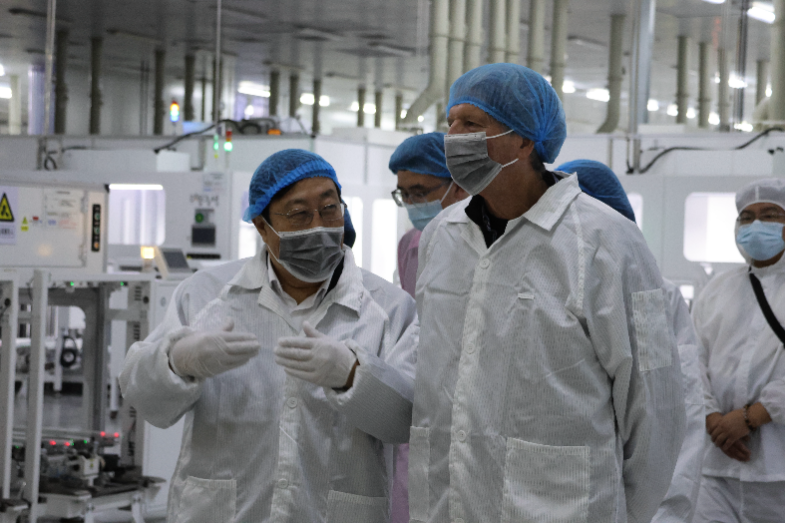
During the visit, Professor Green and his team toured DAS Solar's Central Research Institute and DBC cell production lines, gaining detailed insights into the industrialization progress of DBC technology and recent improvements in conversion efficiency. Professor Green highly praised DAS Solar's rapid advancements in DBC 3.0 Plus technology and its large-scale commercialization progress.
He noted that, building on its deep expertise in TOPCon technology, DAS Solar has established a distinctive pathway for developing high-efficiency, cost-competitive DBC cells, with mass-production efficiencies now exceeding 27.8%. According to Professor Green, the continued innovation of DBC technology aligns closely with the photovoltaic industry's long-term focus on improving both efficiency and affordability, while also supporting the broader transition from P-type to N-type technologies across the global solar sector.
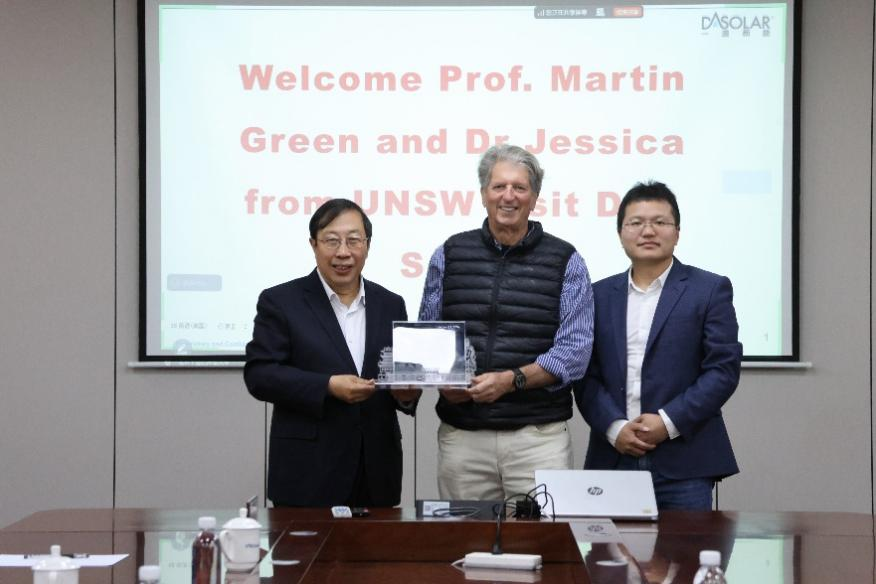
During the technical symposium, discussions focused on DBC technology upgrades, low-silver and silver-free metallization, copper paste alternatives, silicon-based tandem cells, multi-photon SFOS technology, and future PV technology trends. Dr. Song presented DAS Solar's "One Core, Three Branches" technology roadmap and shared updates on the company's progress in DBC, TOPCon, perovskite/silicon tandem, and SFOS technologies, as well as their commercialization pathways. Dr. Jessica from UNSW introduced the latest progress of joint research projects between the two parties and outlined future research priorities. Dr. Zhang further discussed future collaboration plans related to DBC efficiency improvements and low-silver metallization technologies.
By combining UNSW's strengths in advanced scientific research, precision testing, and simulation technologies with DAS Solar's expertise in DBC module development, large-scale manufacturing optimization, and industrialization, both sides aim to accelerate breakthroughs in BC cell efficiency and next-generation PV technologies. During the exchange, Professor Green also reflected on the longstanding contribution of the UNSW photovoltaic laboratory to global solar talent development and technological innovation.
As one of the world's leading PV research institutions, UNSW has played a pioneering role in solar technology innovation for decades. Under Professor Green's leadership, the university's PV laboratory has contributed to the original development of key technologies including PERC, PERL, and TOPCon, while repeatedly setting global efficiency records for crystalline silicon solar cells.
Looking ahead, DAS Solar will continue to strengthen cooperation with leading universities and research institutions worldwide, leveraging industry-academia collaboration as a core driver of technological innovation and next-generation solar development.
COPYRIGHT© DAS Solar 2022 – All Rights Reserved 浙ICP备19001487号-1 浙公网安备33080302000236