





How Does DAS Solar Redefine PV Deployment with Next-Gen Flexible Mounting Systems
2025-12-11
As global solar deployment accelerates toward higher efficiency, diversified landscapes, and lower-carbon development, mounting technology has become a decisive factor shaping the performance, cost structure, and scalability of photovoltaic projects. Addressing the industry's growing need for solutions capable of operating across complex terrains and environmental conditions, DAS Solar introduces a comprehensive upgrade of its flexible mounting portfolio—DAS Flex, the company's flexible fixed structure, and DAS Track, its flexible tracking system. Together, the two products form a dual-flex solution engineered to deliver exceptional terrain adaptability, improved cost-effectiveness, and enhanced energy performance, marking a significant step forward in the evolution of solar engineering.
A Decade of Engineering Expertise Fuels Core Competitiveness
The development of DAS Solar's flexible mounting systems is rooted in more than ten years of dedicated research and practical experience. The company's engineering team, composed of professionals with long-term specialization in flexible structural design, wind engineering, and anti-vibration systems, has created a technical framework that integrates mechanical innovation, materials optimization, and system-level intelligence. Through four generations of upgrades, DAS Solar has built an advanced structural platform that addresses long-standing industry challenges associated with installing PV systems on hilly terrain, uneven landscapes, or ecologically sensitive environments.
DAS Flex: Flexible Mounting Built for Complex Terrain
DAS Flex, the fixed flexible mounting system, is engineered to overcome the limitations of traditional rigid mounting systems in scenarios where slopes, elevation differences, and geological constraints often lead to high earthwork requirements and ecological disturbance. The system adopts a flexible anti-wind stabilization design that uses tensioned pre-stress elements to control cable sag while a north–south stabilizing rod system integrates the structure into a unified frame with significantly improved torsional stiffness. This approach strengthens resistance against wind-induced vibration and environmental loads.
The flexibility of DAS Flex enables deployment across a wide range of terrains. Single spans can extend from 25 to 60 meters, with clearance heights adjustable between one and eight meters, allowing installations on slopes exceeding sixty degrees. These characteristics make the system particularly suitable for mountainous areas, desertification control projects, ecological reserves, shoreline developments, and water-adjacent environments where traditional mounting solutions often require extensive ground modification. By minimizing land disturbance, DAS Flex supports both energy development and ecological conservation.
DAS Track: Flexible Tracking Designed for Higher Energy Output
DAS Track, the single-axis flexible tracking system, focuses on maximizing energy generation while reducing overall system costs. The system adopts a hybrid architecture combining flexible support and flexible drive elements, allowing the structure to maintain stability under wind loads while enabling smooth, precise tracking movement. Its dual-row wind-resistant truss design ensures inherent structural self-stability, and the use of multi-row linkage drives reduces the number of mechanical components, lowering equipment cost and operational risk.
With a maximum span of 25 meters, a clearance range of two to five meters, and a tracking angle from -60 to +60 degrees, DAS Track offers broad compatibility with large-scale utility applications. Compared with traditional fixed structures, the system reduces steel consumption by approximately thirty percent while delivering more than a ten percent increase in annual energy output. Under peak–valley electricity pricing mechanisms, this performance advantage translates into stronger financial returns and improved project economics.
High-Strength Performance Validated by Extreme Testing
The structural reliability of DAS Solar's flexible mounting solutions has been validated through extensive laboratory and field testing. The systems' spatial cable–truss architecture distributes loads through a tension-based mechanism that enables the structure to dissipate external forces more effectively than conventional rigid frameworks. During wind tunnel testing conducted by Nanjing University of Aeronautics and Astronautics, the flexible structures demonstrated stable performance under wind speeds of up to 46 meters per second, significantly exceeding the typical threshold associated with severe typhoon conditions.
To further validate long-term reliability, TÜV conducted mechanical vibration testing equivalent to two million vibration cycles, during which the mounted modules maintained excellent resistance to microcracking and structural fatigue. In a real-world stress event at the 70 MW fishery complementary PV project in Hainan, the flexible mounting system successfully withstood the impact of Super Typhoon Yagi classified at level-17 intensity. Post-event inspection by TÜV confirmed that the mounted modules exhibited no deformation, no glass breakage, no microcracks, and no structural compromise, demonstrating the robustness of the flexible architecture in extreme weather environments.
Full-Spectrum Applications Maximize Ecological and Economic Value
The combined adaptability of DAS Flex and DAS Track enables their deployment across nearly all modern PV applications, from large-scale desert projects to dense urban environments. In ecological restoration zones such as the Yuyang project in Shaanxi and the Kubuqi Desert project in Inner Mongolia, the flexible structures supported a dual-value model of "power generation above and ecosystem recovery below", allowing desertification control and renewable energy development to progress simultaneously.
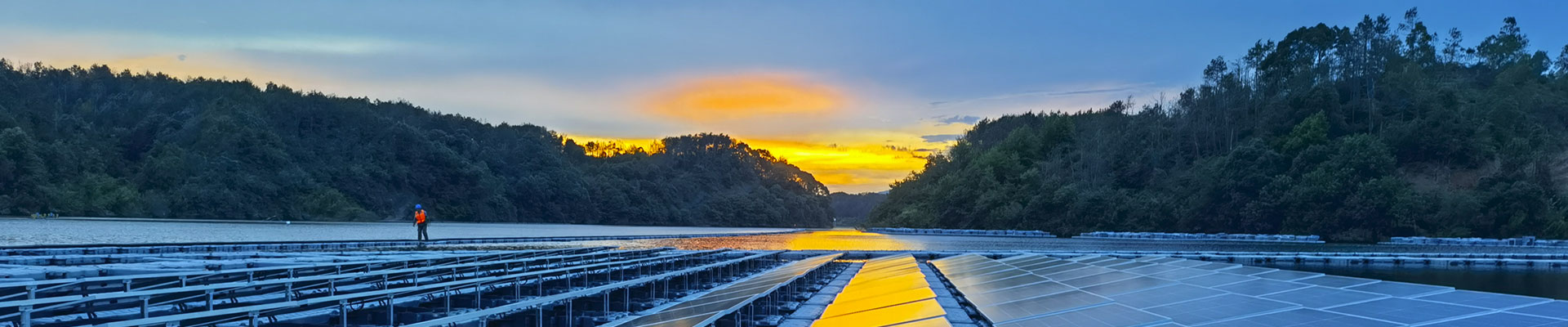
In urban settings, flexible mounting solutions allow designers to leverage irregular roofs and fragmented structural surfaces, improving the utilization of limited metropolitan space. Over water, such as in the fishery complementary PV system, the flexible structure supports stable module installation while allowing normal aquaculture activities beneath the array. In agricultural, forestry, and pastoral settings, the high-clearance design reserves sufficient space for crop cultivation, grazing, or forest management. Meanwhile, the flexible tracker enables continuous energy optimization without interfering with agricultural operations. These combined capabilities position DAS Solar as an industry leader in multi-scenario PV deployment.
By 2024, global installations using DAS Solar's flexible mounting systems exceeded 1 GW. The company anticipates an increase to approximately 2.5 gigawatts in 2025, with its number of mountain-terrain projects ranking first in the industry.
Reshaping a New Solar Development Model
The introduction of DAS Flex and DAS Track reflects a broader transformation underway across the photovoltaic sector. As solar projects expand from flat land into diverse, complex, and often ecologically sensitive terrains, flexible mounting technology has emerged as a critical enabler of high-quality development. DAS Solar's innovations in structural design, material engineering, and automated control have reshaped the cost structure and value logic of PV installation by improving safety, reducing system costs, enhancing energy performance, and minimizing ecological disturbance.
Under the global transition toward carbon neutrality, PV applications are evolving from pure power generation to integrated "PV+" models that combine solar energy with ecology, agriculture, aquaculture, and urban development. DAS Solar's mounting system solution provides the technical foundation required to support these emerging models, enabling solar power to extend into new sectors such as ecological restoration, rural revitalization, and urban energy transformation. Localized production capabilities further strengthen supply chain resilience and contribute to regional economic development, promoting a sustainable industrial ecosystem.
Looking ahead, DAS Solar will continue advancing flexible mounting technologies, improving product performance, and expanding application boundaries. As flexible systems enter large-scale deployment across more global markets, they will play an increasingly important role in driving higher efficiency, lower costs, and more sustainable development in the global photovoltaic industry. Through continuous innovation, DAS Solar remains committed to supporting the world's transition toward cleaner, more resilient energy systems.
COPYRIGHT© DAS Solar 2022 – All Rights Reserved 浙ICP备19001487号-1 浙公网安备33080302000236